
Redesign of True K-Beauty, a Korean beauty retailer
An Affordable Jewelry Brand With No Clear Audience
Kate Jewels Boutique, based in New York, offers a wide range of fashion jewelry, from handmade pieces to high-quality stainless steel. With a catalog of over 100 products and prices well below fine jewelry, Kate had a real advantage: jewelry people could actually afford to wear often, without the anxiety that comes with owning something precious. Her original site, built DIY, wasn't communicating that advantage or giving customers a reason to buy more than one piece at a time.
The Challenge: Positioning Affordable Jewelry Against Fine Jewelry
The core problem wasn't the product. It was the story the site wasn't telling. Without clear positioning, a large, affordable jewelry catalog can read as generic rather than intentional. Kate needed a strategy that made her price point and product range feel like a benefit, not a compromise, and a site experience to match.
The Approach: Repositioning the Brand, Then Rebuilding the Experience
A messaging strategy built around a specific buyer
Rather than trying to appeal to everyone, we narrowed in on a clear audience: young women who want high-quality jewelry but aren't shopping for fine jewelry. From there, the messaging centered on a single idea: "Jewelry that's meant to be worn, not stored." The goal was to give customers permission to buy and wear multiple pieces freely, without the precious-object hesitation fine jewelry usually carries.
A premium theme built for a large catalog
The store was migrated to a premium Shopify theme, opening up far more flexible section and layout options than the original DIY build allowed, necessary for a catalog this size to feel organized rather than overwhelming.
A full page redesign across the buying journey
Beyond the homepage, we redesigned the about page, customer service pages, product care page, and FAQ, so every stage of the customer's research and buying process matched the new brand positioning, not just the entry point.
Store category reorganization
With 100+ products, how items are grouped and browsed matters as much as how they're photographed. Categories were rebuilt to make browsing intuitive for a buyer who wants to shop by style or occasion, not hunt through a flat catalog.
Product bundling
Customers can now select 3 or 5 items on a single page and receive a bundle discount, directly reinforcing the "wear more, worry less" positioning by making it easy and affordable to buy multiple pieces at once.
Product personalization
Customers can choose their own pendant or charm and add a heat-stamped name, turning an affordable piece into something personal, a feature usually reserved for higher-priced fine jewelry.
Additional functionality
A language switcher, gift card purchasing, and product reviews were also added, rounding out the store into a fully capable ecommerce experience rather than a template-based storefront.
The Result
Kate Jewels Boutique moved from a DIY store to a fully optimized shopping experience, with a brand position that gives customers a real reason to buy more, and a product experience (bundling, personalization) built to support that behavior at checkout.
[Space here for a number if Kate can share one: conversion rate change, average order value lift from bundling, or repeat purchase rate, would strengthen this section significantly.]
Sound Familiar?
How do I sell affordable jewelry online without it looking cheap?
Lead with positioning, not just price. Framing affordability as freedom to wear and own more, rather than a lesser alternative to fine jewelry, changes how customers perceive the entire catalog.
Should I add product personalization to my Shopify store?
If your product allows for it, personalization (custom charms, engraving, heat-stamped names) increases perceived value without requiring a price increase, and it's a strong differentiator against mass-market competitors.
How do I get customers to buy more than one item at a time?
Bundle pricing, tied to your brand's actual selling point, works best when it reinforces a specific message. Here, bundling wasn't just a discount, it supported the "wear it, don't store it" positioning directly.
The Real Problem: A Website Held Hostage
This situation is more common than most business owners realize. A friend or family member builds the site as a favor, then loses interest, moves on, or simply isn't available when something needs to change. Or the owner never learns the platform well enough to make updates on their own. Either way, the business ends up trapped by its own website.
Michelle reached out to Create Next twice over the course of a year before she made the leap. She knew her business had real potential, but fear of choosing the wrong designer again paralyzed her. After a difficult conversation with her family, she chose to move forward.
The Approach: A Full Shopify Transformation for a 1,000-Product Catalog
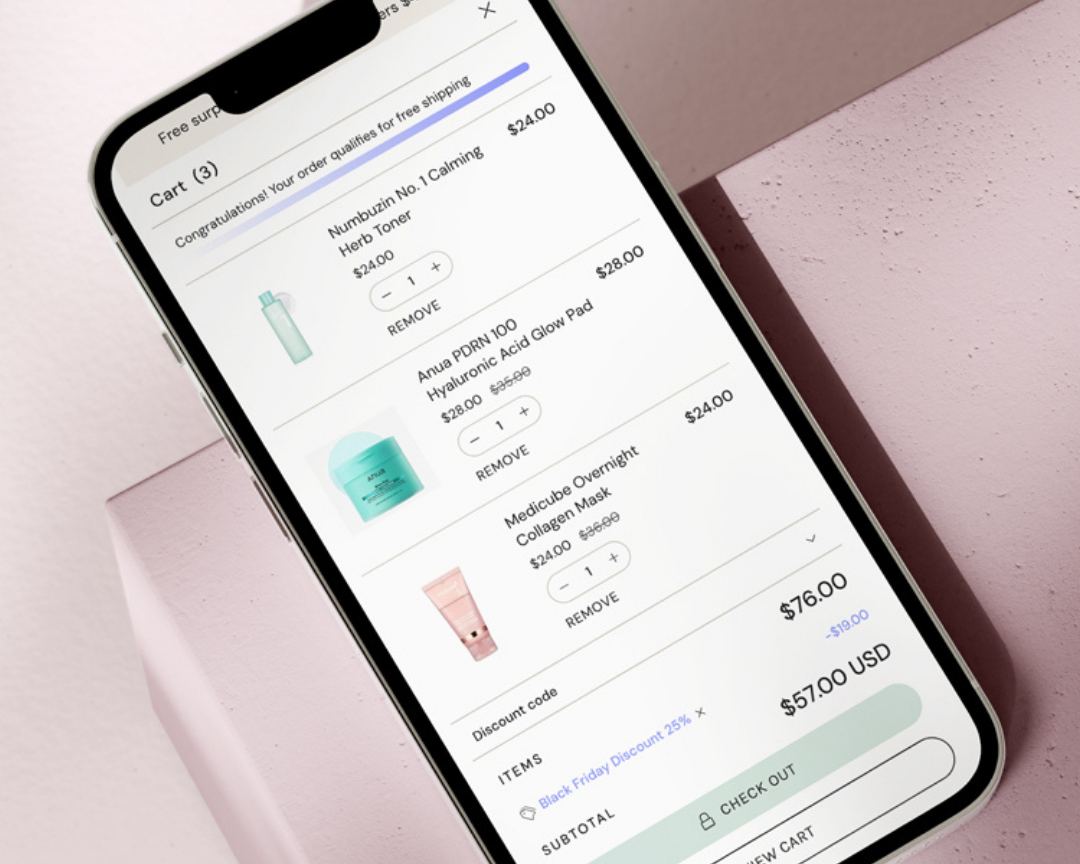
Taking on True K Beauty meant solving for scale (50+ brands, nearly 1,000 products) inside one of the most competitive beauty verticals online. The work broke into three core areas.
Building a Competitive Brand Experience
Reframed the store's messaging to stand apart in a crowded K-beauty market
Migrated to a premium Shopify theme built to handle the catalog size
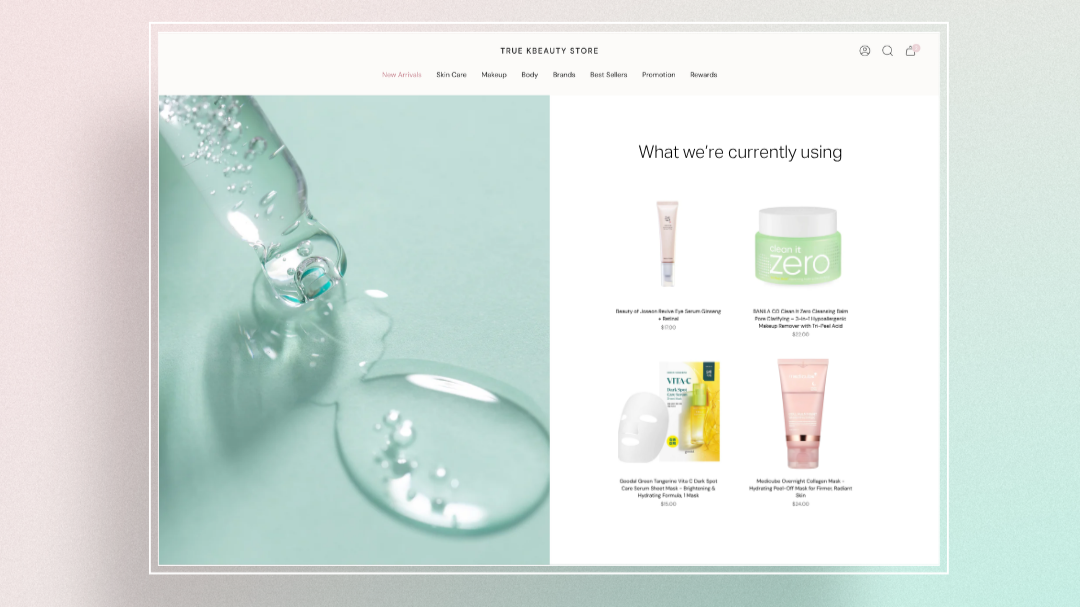
Refreshed the visual identity with a new color palette, elevated layout, and cohesive design system across every page
Rebuilding the Shopping Experience
Designed a new mega menu so customers could shop by brand, skin concern, and type, or the ten-step Korean skincare routine
Introduced virtual skin consultations to replace the personalized guidance customers lose when shopping online instead of in person
Built a high-converting homepage to surface new arrivals, sales, and trending products
Added custom badges to highlight bestsellers and hot items
Set up restock email notifications and on-site product recommendations and upsells
Building Marketing and Retention Infrastructure
Upgraded the loyalty program so customers earn points on both purchases and social engagement
Added event listings to support in-person and community activity
Built email automations to drive repeat purchases and long-term retention
The Result
True K Beauty now has a site that competes with the larger, more established brands in the K-beauty space instead of relying on discounting to move product. More importantly, Michelle is no longer stuck. She's proud of her store again, and relieved to be past the website that held her business back for so long.
The redesign took four weeks from start to finish. The investment for a redesigned website like this was in the $7-9k range.
common question
What do I do if my web designer or developer goes silent?
If your site was built by a friend, family member, or freelancer who's since become unresponsive, you're not locked in. A full rebuild is usually less disruptive than trying to maintain a site nobody can properly update. Gather all login credentials and get organized to move forward.
How do I redesign a large Shopify store with hundreds or thousands of products?
Start with information architecture (navigation, filtering, how customers actually browse) before touching visual design. A mega menu built around how customers shop, by brand, category, or use case, matters more at scale than at a small catalog size.
Should I hire a professional Shopify designer for a Korean beauty or large multi-brand store?
If you're relying on constant discounting to drive sales, that often signals the brand experience isn't doing its job. A catalog this size needs a platform, structure, and design built to support it, not a template stretched past its limits.
Ready to Stop Being Held Hostage by Your Website?
If your business has outgrown its current site, or you're stuck with a website you can't update, don't have access to, or that no longer represents your brand, book a clarity call.