
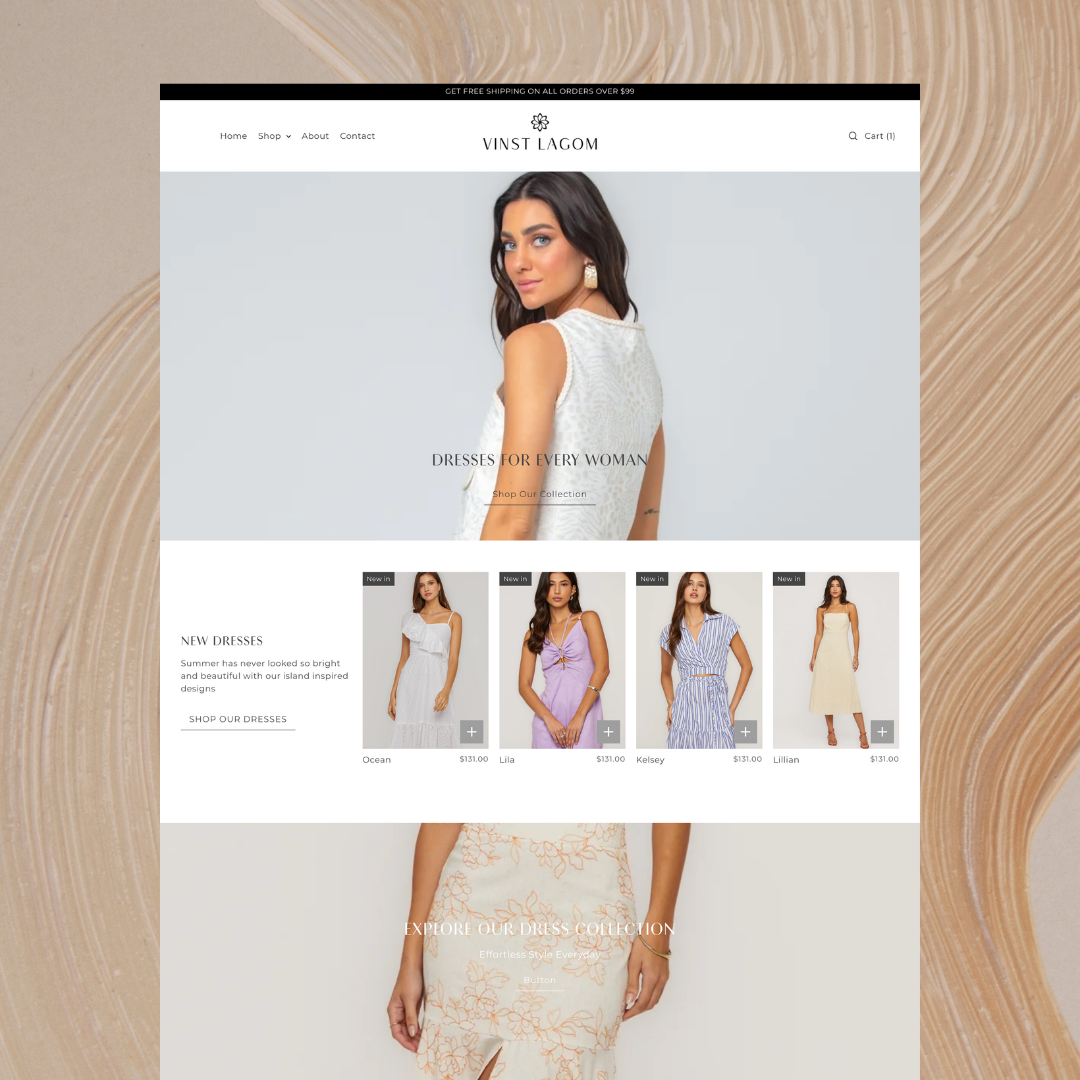
Your Shopify store likely needs a redesign if it no longer reflects your brand, loses shoppers on mobile, brings in traffic without orders, or depends on discounts to make sales. Other common signs are customers who can't find products, product pages that leave questions unanswered, slow load times, and a website you can't update with confidence. If two or three of these sound familiar, a redesign is worth a serious look.
At CreateNext, I design Shopify websites for independent beauty, cosmetics, fashion, clothing, and wellness brands, and the same warning signs show up again and again before a redesign. Websites rarely stop working overnight. Your business grows, your customers change, and the website that suited you at launch slowly stops carrying the brand you're building now.
Signs your website no longer reflects your brand
1. Your brand has outgrown the website
If you've updated your packaging, your product range, or your pricing since launch and the website still looks like the old version of your brand, shoppers notice the mismatch even when they can't name it. A premium product shown on a template that looks assembled from defaults loses trust before anyone reads a review.
A redesign realigns the color palette, photography, typography, and messaging so the website feels as considered as the product. This matters for beauty and cosmetics brands, where shoppers can't touch or test anything, and for fashion and clothing brands, where the brand itself is a big part of what people are buying. A premium product brand like PRL Caviar needs its website to carry that same sense of quality, and you can see how I approached it in the PRL Caviar case study.
2. Discounts are doing the work your brand should
When a sale is the main reason people buy, it's often a sign the website isn't giving shoppers another reason. Brands that look and read like everyone else in their category end up competing on price, and discount codes become a habit that cuts into margin.
A redesign gives you a distinct point of view, clearer messaging, and product pages that explain why your product is worth what it costs. Discounts can then become an occasional tool instead of your main strategy.
Signs your website is losing shoppers
3. Mobile shoppers leave without buying
Check your analytics for the gap between mobile and desktop conversion. Many brands get most of their traffic from phones, especially when it comes from Instagram and TikTok, so a mobile conversion rate far below desktop is costing you orders.
Common causes include small tap targets, product images that push the Add to Cart button out of view, long pages with no sticky button, and menus that are hard to use with one thumb. A redesign treats mobile as the primary layout and adapts it for desktop, instead of the other way around.
4. Traffic is up, but orders aren't
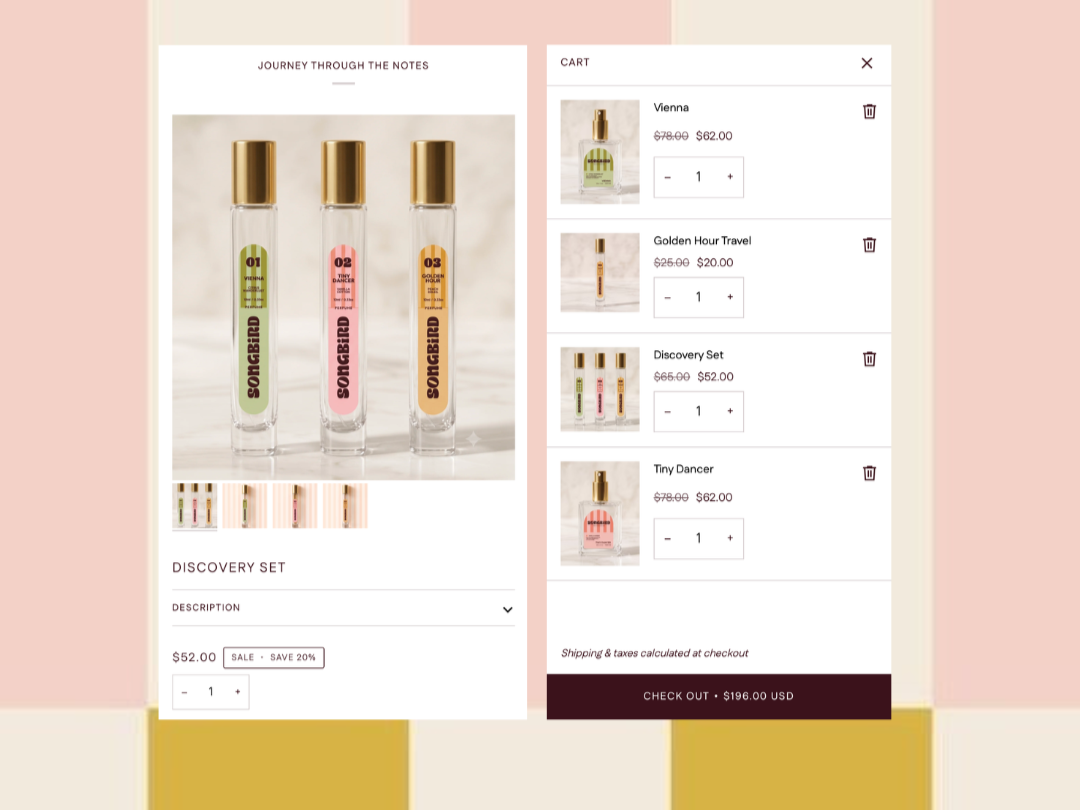
Beauty ecommerce conversion rates are commonly cited at around 2 to 4 percent, so a modest rate on its own isn't alarming. The warning sign is paying for traffic through ads, email, or social and watching it land without results.
Before you spend more on marketing, look at the website. Unclear value propositions, weak product pages, and a cluttered path to checkout leak sales that more traffic can't fix. A redesign focuses on the full path from landing page to checkout so the visitors you already have are more likely to buy.
5. Customers can't find what they're looking for
Catalogs grow, and navigation that worked for twenty products rarely works for two hundred. If shoppers rely on search to find basics, or you get emails asking where something is, the structure needs rework.
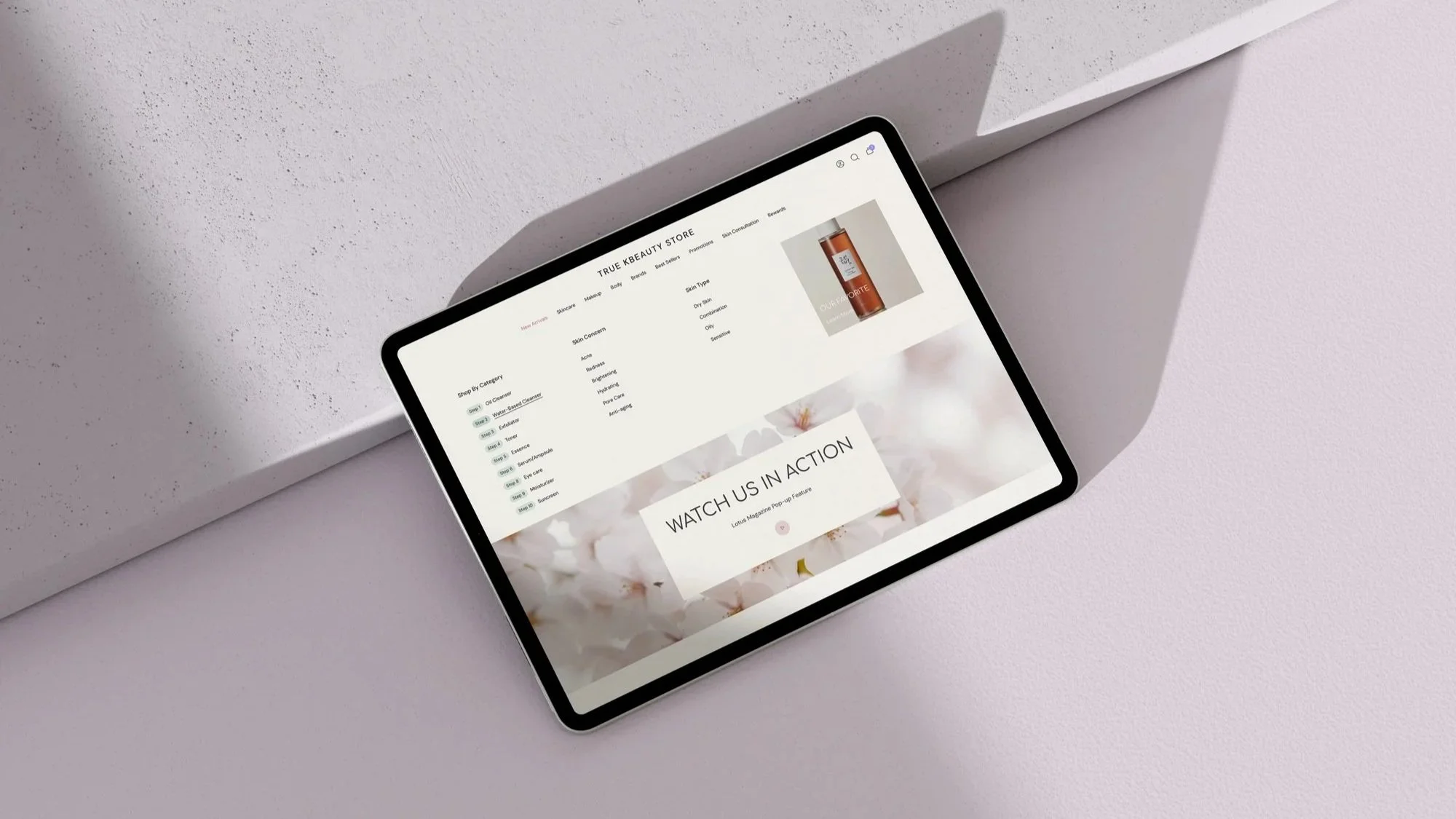
When I redesigned True K Beauty, which carries more than 50 brands and close to 1,000 products, I rebuilt the navigation so customers can shop by brand, by skin concern and type, or by the ten-step skincare routine. Fashion and clothing brands face the same challenge with collections organized by season, category, or occasion. You can read how it came together in the True K Beauty case study.
6. Product pages leave questions unanswered
Shoppers decide on the product page, and they arrive with questions. What's in it, how do I use it, which shade or size is right for me, and what happens if it doesn't work out?
For cosmetics and skincare, that means ingredients, directions for use, and guidance on shade or skin type. For clothing, it means size guides, fit notes, and photos that show the garment on different bodies. When pages answer those questions and reviews sit close to the Add to Cart button, shoppers hesitate less.
7. Pages load slowly, and apps keep piling up
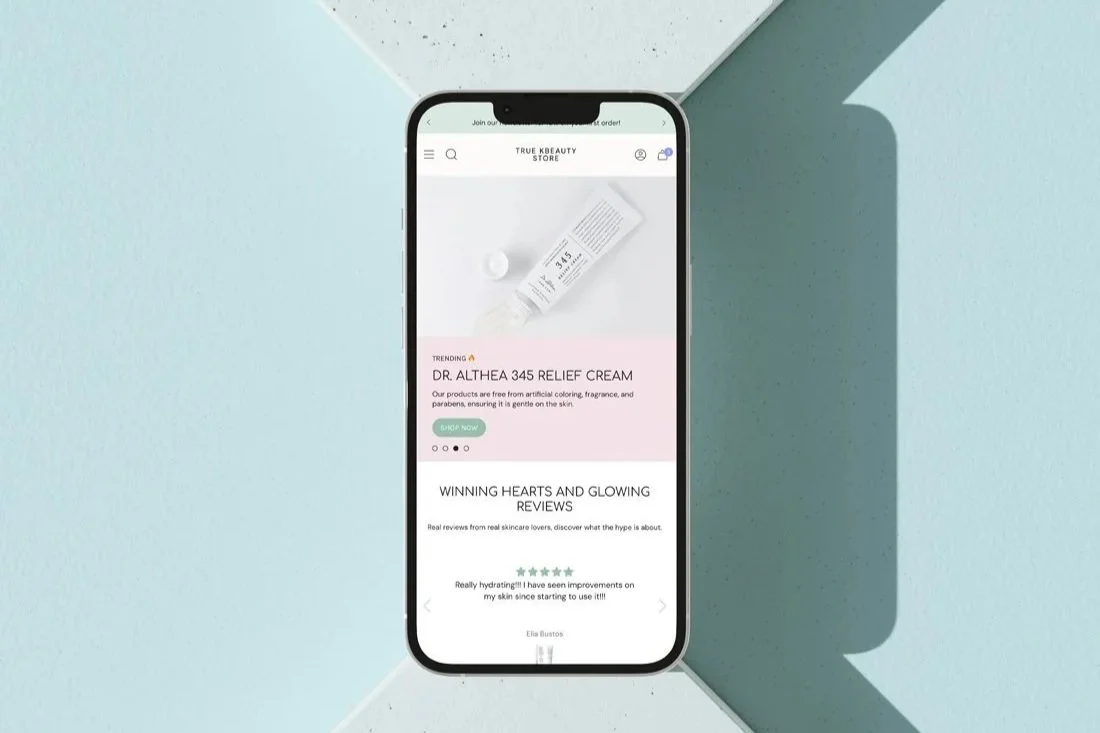
Every app you install adds code to your pages, and beauty and fashion websites already carry heavy imagery and video. If your pages feel slow on a phone, or you can't remember what half your installed apps do, speed is probably costing you sales and search visibility.
A redesign is a chance to remove what you don't use, size and compress images properly, and rebuild features natively in a modern theme instead of layering another app on top.
Signs your website is holding you back
8. You can't make changes without help
If changing a banner, adding a collection, or launching a promotion means waiting on a developer, or nobody remembers how the website was built, the website is controlling you instead of the other way around. This is common when a site was built by a friend, by a freelancer who has since moved on, or on a theme that has been heavily customized over the years.
A redesign gives you a clean build on a modern theme, with sections you can edit yourself and training on how to manage them.
Should you redesign or fix individual problems?
Some problems have a quick fix. A single weak product page, a missing size guide, or an oversized hero image can be handled on its own.
A redesign makes sense when several of the signs above show up together, because the causes are usually connected: a theme that limits your layouts, navigation that can't scale, and a design that no longer fits your brand. If you're unsure which category you're in, a discovery call can tell you. For a sense of what shapes the scope and investment, I explain it in my guide to what a Shopify website costs for a beauty brand.
What a Shopify redesign involves
A good redesign starts with strategy before design: who your customer is, how they shop, and what's holding them back. From there, it covers brand presentation, navigation and collection structure, product page layouts, the mobile experience, and the features that suit your category, such as bundles, quizzes, size tools, or loyalty rewards.
You can see how I work on my Shopify store design page, and I have dedicated pages for beauty and cosmetics brands and fashion and clothing brands.
Frequently asked questions
Do I need a full redesign, or can I fix individual problems?
Individual problems such as one weak product page, a missing size guide, or an oversized image can usually be fixed on their own. A full redesign makes more sense when several signs appear together, such as weak mobile performance, hard-to-use navigation, and a design that no longer fits your brand, because those problems tend to share the same cause.
Will a Shopify redesign hurt my SEO and sales?
It doesn't have to. A careful redesign keeps your best-performing page URLs where possible, sets up redirects for any that change, preserves your content and metadata, and is tested before launch. Done this way, a redesign can improve speed and structure, which supports search performance.
How long does a Shopify redesign take?
The timeline depends on your catalog size, how much custom functionality you need, and how quickly feedback and content come back during the project. A focused refresh of a smaller website moves faster than a rebuild for a catalog with hundreds of products. I scope the timeline for each project after a discovery call.
How much does a Shopify redesign cost?
The cost depends on the size of your catalog, the amount of custom design and functionality, and whether brand design or content is included. Because every project is scoped individually, the clearest answer comes from a discovery call. My guide to what a Shopify website costs for a beauty brand explains what shapes the investment.
Ready to talk about your redesign?
If you recognized your website in a few of these signs, I'd be glad to look at it with you. Book a discovery call and we can talk through what's working, what isn't, and whether a redesign is the right next step.